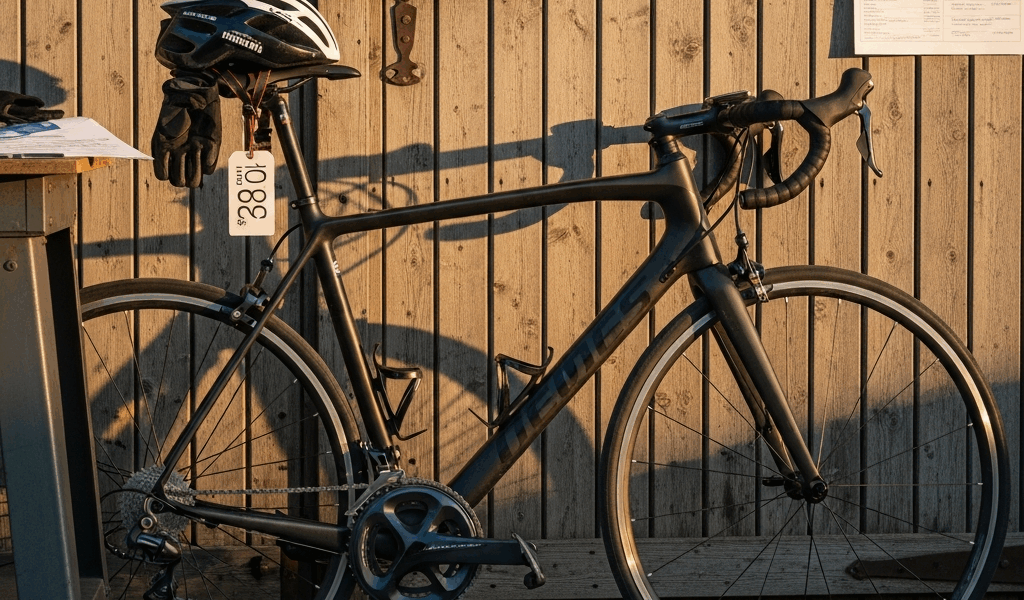
Carbon Fiber Road Bike Worth It for Beginners — The Honest Answer Nobody Gives You
Carbon fiber road bikes have gotten complicated with all the marketing noise flying around. As someone who stood in a bike shop in 2019 with a credit card in hand, staring at a Cannondale CAAD13 and a Giant TCR Advanced sitting side by side on the floor, I learned everything there is to know about this exact decision. The price gap was just over $900. I bought the aluminum CAAD13. Today, I will share it all with you — including why that was probably the right call, and why the answer looks different depending on who’s asking.
Here’s what I wish someone had actually told me before I burned three weeks reading forum threads written by people who already owned three carbon bikes and had forgotten what it felt like to be new.
What You Actually Give Up With Aluminum
Not much, honestly. And I say that as someone who has since ridden both — a lot.
But what is a “premium aluminum frame” really? In essence, it’s a race-capable frame built from manipulated alloy tubing that’s been shaped, butted, and refined over decades of engineering. But it’s much more than that. Modern aluminum frames — the Cannondale CAAD series, the Trek Émonda ALR, the Giant Contend SL — are genuinely excellent bikes. Not consolation prizes. The CAAD13 was built with actual race geometry and a ride quality that would have seemed impossible in aluminum back in 2009. Calling it a “budget frame” is just a category error.
The real differences come down to three things: weight, vibration, and what happens when you crash.
On weight — a high-end aluminum frame typically runs 1,100–1,200g. A comparable carbon frame sits closer to 750–900g. That’s roughly 400–600g of difference at the frame level alone. On a flat road, you won’t feel it. On a long climb, that gap works out to maybe 10–15 seconds over a 10-minute effort at recreational pace. Not nothing. Also not transformative.
Aluminum does transmit road buzz more directly than carbon. Over a 40km ride on smooth pavement, the difference is minor — genuinely minor. On chip seal or cracked urban roads after two hours in the saddle, aluminum fatigue is real. You feel it in your hands and lower back. That’s a legitimate tradeoff, not marketing copy.
The crash argument favors aluminum pretty clearly. Carbon cracks in ways that aren’t visible and aren’t safe to ride on. Aluminum dents. A dented aluminum frame is usually still rideable or cheaply repairable. A cracked carbon frame can mean a $400–$800 repair bill or a full replacement — and for a beginner still figuring out how to unclip at intersections — I personally tipped over at a stoplight twice in my first month — that matters more than most reviewers admit.
Where Carbon Makes a Noticeable Difference
Probably should have opened with this section, honestly, because the vibration damping question is where carbon earns its price tag — at least when the conditions are right.
Carbon isn’t just “smoother.” The specific sensation is a dampening of high-frequency road chatter — the constant micro-vibrations coming through the fork and seatstays on rough pavement. On a four-hour endurance ride over mixed road surfaces, carbon genuinely reduces accumulated fatigue in your hands, forearms, and lower back. That’s not placebo. The carbon fiber layup can be tuned to absorb specific frequencies in a way aluminum simply cannot replicate.
Long rides are where this matters. If your typical outing is 60–90 minutes on decent roads, you probably won’t notice the difference. If you’re building toward century rides or granfondos on imperfect pavement, the comfort gap is real — and it compounds across hours.
There’s also a psychological dimension worth naming. Riding a bike you love makes you want to ride more. That’s not trivial for a beginner trying to build a habit. If owning a carbon bike gets you out the door three more times a month, that compounds over a year into meaningfully more fitness and more time in the saddle. That’s what makes carbon bikes endearing to us riders who obsess over this stuff.
That said — and this part is critical — frame material is not the biggest factor in how a bike rides for most beginners. Fit is. Wheels are. A carbon frame with stock box-section wheels and a poor fit will ride worse than a well-fitted aluminum bike rolling on a set of Shimano RS500 wheels. If you’re choosing between a carbon frame and better components or a professional fit, take the components and the fit every time. Don’t make my mistake of fixating on frame material while ignoring everything else.
The Budget Trap Beginners Fall Into
This is where I see new riders get burned most often.
Entry-level carbon bikes — new carbon bikes in the $1,800–$2,600 range — almost always cut costs on components to hit their price point. The frame is carbon, yes. But the groupset is Shimano Claris or Sora — 7 or 8-speed — and the wheels are heavy house-brand hoops weighing 1,900g or more. The carbon frame is doing all the marketing work while the rest of the bike quietly underperforms on every ride.
Compare that to a $1,600 aluminum bike specced with Shimano 105 — 11-speed, meaningfully better shifting feel and long-term reliability — and a decent set of mid-range alloy wheels. The aluminum bike will accelerate more crisply, shift more cleanly, and require less maintenance across the first two years. The carbon bike will look more impressive at the coffee stop. So, without further ado, let’s dive into what that looks like in concrete numbers.
The 2023 Trek Domane AL 5 at around $1,699 ships with Shimano 105 and a solid aluminum endurance frame. The Specialized Allez Sport at $1,350 is even better value. Meanwhile, a $2,400 entry-level carbon option from several brands at that same price point was still running Claris as recently as 2022. The carbon frame does not automatically mean a better bike. Not even close.
When Carbon Actually Makes Sense for a New Rider
There are real scenarios where buying carbon early is the right move. They’re just more specific than “you’ll love it.”
Carbon makes sense if you’re already logging 5,000km or more per year — which, to be clear, means riding four or five days a week consistently, long enough to know this isn’t a phase you’re going to abandon after summer. At that volume, the comfort and weight advantages compound in ways that actually show up in your life.
It makes sense if you’re in year two or three of riding, you’re certain you’re staying in the sport, and you find a used carbon bike from a reputable brand — Specialized, Trek, Canyon, Cannondale — at 40–50% below original retail with a clean frame inspection. A used Specialized Tarmac SL6 at $1,800 is a completely different conversation than a new entry-level carbon bike at $2,400. I’m apparently drawn to used Tarmac SL6s specifically, and that platform works for me while most entry-level new carbon bikes never quite deliver on their promise.
It also makes sense if you’re a larger or heavier rider who experiences significantly more road fatigue per hour, or if you have existing joint issues where vibration damping is a medical consideration rather than a preference.
If none of those apply to you, you’re buying carbon for the feeling of buying carbon. That’s fine — but be honest with yourself about it.
The Honest Verdict — Start Here Before You Decide
Year one, budget under $2,500, new to road cycling: buy the best aluminum bike you can afford and spend whatever’s left on a professional bike fit and a decent set of wheels. The Trek Émonda ALR 5 and the Cannondale CAAD13 105 are both exceptional bikes — they will not hold you back at any fitness level you’re realistically going to reach in your first two years. Neither costs more than $2,000. First, you should get a professional fit — at least if you plan to ride more than twice a week and want to avoid the knee and lower back issues that plague new riders who skip this step.
Year two or three, you’re still riding regularly and logging real kilometers: start looking at used carbon from established brands. A second-generation Specialized Tarmac or a Canyon Ultimate CF in the $1,500–$2,000 used range will outperform most new entry-level carbon bikes and cost less. Get the frame inspected by a shop before you buy — a hairline crack in a carbon chainstay is not something you want to discover at 45kph on a descent.
Used carbon might be the best option, as the upgrade path requires patience more than money. That is because the bikes that deliver on carbon’s actual promise — real vibration damping, genuine weight savings, tuned ride quality — sit at $3,000 and above new. The used market brings those bikes into reach without the entry-level component compromise.
The carbon fiber road bike question isn’t really about carbon versus aluminum. It’s about whether you’re buying the right bike for where you actually are today — not where you plan to be in two years. Buy for the rider you are right now, and upgrade when the bike genuinely becomes the limiting factor. It won’t be the limiting factor for a while. Trust me on that one.




Stay in the loop
Get the latest cyclingfan.org updates delivered to your inbox.