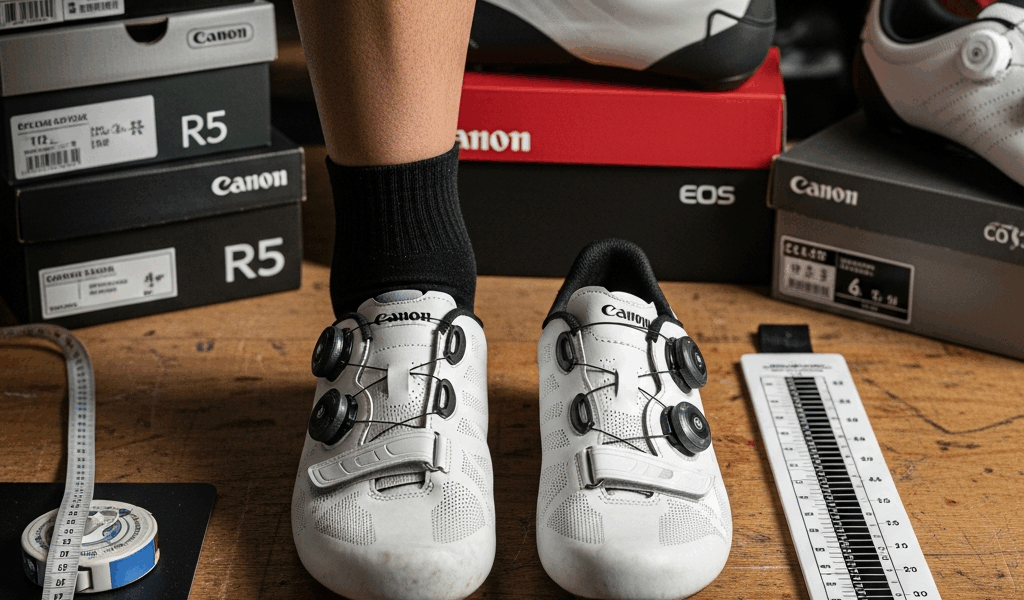
How to Tell If Your Cycling Shoes Are Too Narrow
Cycling shoe fit has gotten complicated with all the marketing noise flying around. Every brand claims their shoe fits “all foot types” and you end up 45 minutes into a ride wondering why your foot feels like it’s been wrapped in electrical tape.
As someone who ruined a 78-mile century ride in a pair of Specialized S-Works shoes that felt completely fine at the bike shop, I learned everything there is to know about narrow shoe fit. Today, I will share it all with you.
Here’s what a too-narrow shoe actually feels like — not from a sizing chart, but from real saddle time:
- Numbness in the ball of your foot. Not tingling. Actual numbness. Around the 45-minute mark, your toes stop sending signals. You can still pedal, but sensation under the metatarsal heads is just gone.
- Hot spots on the outer edge of your foot. It starts warm. Then it becomes a distinct, grinding ache around the pinky toe area where the shoe wall digs in.
- Pinky and ring toe pain after 30+ minutes. Not immediate — immediate pain is usually a length problem. This is delayed, creeping pain. The forefoot box is compressing your toes sideways.
- Black toenails that have nothing to do with length. You’ve already checked sizing. The shoe isn’t too long. But your big toe or pinky is still bruising. That’s lateral compression — sides squeezing in, not the toe box ceiling pushing down.
- Swelling and ache on the outside of your midfoot. Feet swell on long rides. Everyone’s do. A shoe that’s already snug side-to-side gives that swelling exactly nowhere to go.
Two or more of these happening consistently? The shoes are too narrow. Not your feet — the shoes. That distinction matters.
Why Cycling Shoes Fit Differently Than Regular Shoes
But what is a cycling shoe, really? In essence, it’s a rigid platform designed to transfer leg power directly to the pedal. But it’s much more than that — it’s also the structure your entire foot has to live inside for hours at a time, unable to flex or splay the way it naturally would in a running shoe.
That stiffness is the point. A carbon sole transfers watts. A soft sole absorbs them. The trade-off is that your foot can’t redistribute pressure the way it normally does while walking. It needs lateral room just to handle the load of a normal pedal stroke. Narrow shoes don’t just feel uncomfortable — they create a pressure bottleneck that kills both performance and circulation.
I’m apparently a 2E width — wide, but not dramatically so — and Bont works for me while Sidi never does, even in the same nominal size. Found that out after buying a pair of Sidi Shots at $280 a pop. Don’t make my mistake.
Step-by-Step Fix — Start Here Before Buying New Shoes
While you won’t need to gut your entire gear setup, you will need a handful of adjustments and maybe $40 in insoles. Try these first. Seriously.
Move your cleat position inward
Your cleat is probably sitting exactly where the manufacturer placed it — right out of the box. Move it roughly 2 to 3 millimeters toward the inside of the sole. This shifts your foot’s pressure point inward, away from the narrow outer wall of the shoe. Small adjustment. Real results. It redirects compression toward your arch, which handles pressure far better than the lateral edges of your forefoot.
Loosen the BOA dial or buckle over the ball of your foot
Most shoes use either a BOA rotary dial or a strap system crossing the midfoot. That closure compresses the metatarsal zone — exactly where numbness develops first. Don’t remove it entirely. Just back it off enough that you can slide your index finger underneath when your foot is fully loaded in the shoe. Heel security stays. Forefoot compression drops. It’s a five-second fix that works more often than it should.
Try a thinner insole
Stock cycling insoles run thicker than necessary. Swapping in a thin performance insole — not a cushioned aftermarket one, you want minimal stack height — can recover 3 to 4 millimeters of lateral volume inside the shoe. Superfeet makes a cycling-specific option called the Carbon that runs genuinely flat. Powerstep has one too. Either one around $40.
Add a wide insole instead
Sounds contradictory, but wide cycling insoles provide arch support without adding vertical height. Better arch support spreads load more evenly across the whole foot — which reduces the pressure concentration on the sides. Some riders fix their numbness problem entirely with this one change. Test it on a 30-minute ride before committing.
Probably should have opened with this section, honestly. Most people skip straight to shopping for new shoes when a $38 Superfeet insole would have closed the case entirely.
Which Cycling Shoe Brands Actually Run Wide
This is where troubleshooting either wraps up or continues into your wallet. If you’ve worked through all four adjustments and you’re still numb at the 45-minute mark, the shoe itself is the problem. That’s what makes fit so endearing to us cyclists — no amount of tinkering fixes a fundamentally wrong last shape.
So, without further ado, let’s dive in — here’s what actually runs wide:
- Bont. The gold standard for wide feet. Full stop. Bont’s standard Road and Track models are built on a noticeably wider last than most competitors, and they’re heat-moldable on top of that. Warm them in a kitchen oven — 200 degrees Fahrenheit, 90 seconds — and mold them directly to your foot shape. Expect to spend $200–$250. For a near-custom fit, that’s genuinely reasonable.
- Shimano. Offers W-width versions of their RC and SH lines — look for the “W” suffix in the model name. The RC7W and SH-RC702W are the most popular options, running $180–$220. Legitimately wider than standard, though not quite as roomy as Bont’s last.
- Giro. Mid-volume. Not narrow, not wide — somewhere squarely in the middle. Their Republic and Sentrie lines fit most average-width feet without drama. Safe choice if your current shoe is just slightly too snug rather than fundamentally wrong.
- Sidi. Runs narrow, especially through the toe box. Not a flaw — Sidi designs around a performance-first philosophy, and that shows in every measurement. Just avoid them if you have wide feet.
- Lake. High-volume option, particularly the CX and MX lines. Less available in local shops, but if you have genuinely wide feet and heat-moldability appeals to you, Lake is worth a serious look online.
Buy from a shop with a real return policy, or use an online retailer offering a 30-day window. The last thing anyone needs is a $230 shoe that produces identical hot spots to the one it replaced.
When You Actually Need to Replace Your Shoes
You’ve moved the cleat. Loosened the midfoot strap. Swapped insoles twice. Still getting hot spots and numbness before the 50-minute mark.
At that point, the shoe is the problem. Not your foot. The shoe.
Here’s the actual decision checklist — three questions:
- Have you moved your cleat inboard by 2–3 millimeters? Yes or no.
- Have you loosened the midfoot closure enough to fit a finger underneath? Yes or no.
- Have you tested a thinner insole across at least two separate 30-minute rides? Yes or no.
All three yes and you’re still in pain? The shoe’s last shape is incompatible with your foot. That’s structural. No adjustment fixes it. You need a wider model — Bont or Shimano W-width being the most practical starting points depending on your budget.
Your feet are doing the actual work out there, every single pedal stroke. They deserve shoes built for their shape. That’s not a luxury item. That’s just basic equipment sense.




Stay in the loop
Get the latest cyclingfan.org updates delivered to your inbox.