
Understanding how pro cycling became what it is has gotten complicated with all the nostalgia and revisionism flying around. As someone who fell down the cycling history rabbit hole years ago, I learned everything there is to know about the sport’s evolution from penny-farthing circus acts to today’s billion-dollar enterprise. Today, I will share it all with you.
Professional cycling as we know it—with team buses, power meters, wind tunnels, and million-euro budgets—emerged from something almost unrecognizably different. Tracing that journey helps you appreciate why the sport operates the way it does.
The Prehistoric Era: High Wheels and Madness
Cycling races began in the 1860s and 1870s on penny-farthings—those absurd machines with giant front wheels. These early events were circus spectacles more than athletic competitions. Riders crashed constantly, often catastrophically.
The safety bicycle (two equal-sized wheels, chain drive) arrived in the 1880s and made racing viable as a mass sport. Suddenly, competitions could happen on roads rather than just velodromes, and ordinary people could participate.
Birth of the Grand Tours: Newspaper Wars
The Tour de France wasn’t created as a sporting event—it was a circulation strategy. L’Auto newspaper invented the race in 1903 to outsell rival publications. The formula worked brilliantly: create impossible athletic challenges, cover them extensively, sell papers to a fascinated public.
That’s what makes the early Tour endearing to us cycling history nerds—it was genuinely wild. Stages were almost sadistically long, 400+ kilometers wasn’t unusual. Riders started at midnight and raced through the following day. Mechanical support barely existed; riders fixed their own bikes on roadsides.
The Giro d’Italia (1909) and Vuelta a España (1935) emerged from similar media-driven motivations. Newspapers needed content; Grand Tours provided endless drama.
The Sponsor Era Begins
Through the mid-20th century, cycling teams evolved from loose national organizations to commercially sponsored squads. Italian teams like Bianchi and French teams like Peugeot carried bike manufacturer names—logical branding since winning races sold bicycles.
The transformation accelerated in the 1970s and 1980s as non-cycling sponsors recognized the sport’s marketing value. Teams named after supermarkets, insurance companies, and consumer brands became normal. Money increased; professionalization followed.
The Equipment Revolution
Until the 1980s, racing bikes looked essentially similar to road bikes ordinary people rode. Steel frames, toe clips, friction shifting, rim brakes. Weight mattered but within limited ranges.
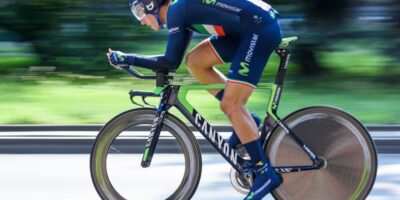
Probably should have led with this section, honestly. Greg LeMond’s 1989 Tour de France time trial victory—won by 8 seconds using an aerodynamic handlebar setup—triggered cycling’s equipment arms race. Suddenly, aerodynamics could win Grand Tours. Investment poured into research.
Carbon fiber frames arrived in the 1990s, eventually eliminating steel and aluminum from professional racing. Electronic shifting (Shimano Di2) debuted in 2009. Disc brakes became standard in the 2020s. Each innovation created competitive advantages that forced sport-wide adoption.
The Doping Industrial Complex
Doping has existed in cycling almost from the beginning—early riders used strychnine, cocaine, and alcohol to manage pain. But the systematic blood doping and EPO usage that emerged in the 1990s represented something qualitatively different.
The Festina affair (1998) and subsequent investigations revealed organized team doping programs. The Armstrong era normalized the most sophisticated chemical manipulation in sports history. Cycling’s reputation was devastated.
Modern anti-doping efforts—biological passports, out-of-competition testing, WADA oversight—emerged from cycling’s darkest period. The sport became the testing ground for procedures now used across athletics.
The Data Revolution
Power meters existed in laboratories for decades but became race-ready in the 2000s. Suddenly, riders could quantify their output precisely. Training became scientific rather than intuitive.
Team Sky (now INEOS) pioneered data-driven racing in the 2010s. Their coaches calculated exactly what wattages their leaders should produce at what points in races. Success was engineered rather than improvised.
Today’s peloton is essentially a mobile data center. Every rider generates continuous power, heart rate, and GPS information. Team cars analyze this in real-time. Post-race analytics shape future training and tactics.
The Globalization Moment
Cycling was European-dominated through most of its history. Americans (LeMond) and Australians (Phil Anderson) were novelties. The peloton was overwhelmingly French, Belgian, Italian, and Spanish.
That changed dramatically in the 2000s. Colombian climbers became GC contenders. African riders like Biniam Girmay emerged as world-class talents. Chinese and Japanese investments began funding teams.
The WorldTour is now genuinely global, with races on every continent and riders from dozens of countries competing at the highest level.
The Money Explosion
Cycling prize money remains modest compared to tennis or golf, but team budgets have exploded. INEOS reportedly spends 50+ million euros annually. UAE Team Emirates isn’t far behind. Even mid-tier WorldTour teams require 25+ million euros to compete.
This money comes from wealthy individual backers, sovereign-adjacent organizations, and conventional corporate sponsors. The financial disparities create sporting disparities—well-funded teams attract better riders and staff, creating self-reinforcing advantages.
Where We Are Now
Professional cycling today is safer, cleaner (probably), more scientific, and more global than ever. But it retains the fundamental characteristics that made it compelling in 1903: humans pushing their physical limits across impossible terrain, competing for glory and survival.
That continuity across 120+ years is remarkable. The sport has evolved continuously while maintaining its essential identity. Understanding this history makes watching modern racing far more interesting.


Stay in the loop
Get the latest cyclingfan.org updates delivered to your inbox.