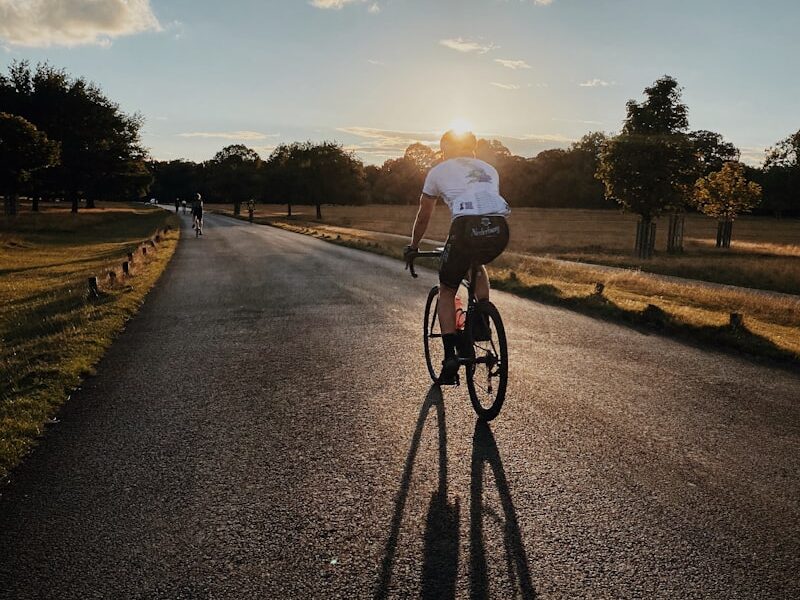
Understanding Tire Pressure: A Road Cyclist’s Quick Guide
Tire pressure is one of those things that seems dead simple until you actually start paying attention, and then you realize it affects basically everything about how your bike rides. Run them too hard and you’re bouncing off every crack and pebble while your grip disappears. Too soft and you’re fighting the bike through corners while risking pinch flats. I spent my first couple years of road cycling just pumping everything to max pressure because, well, harder equals faster, right? Turns out… not so much.
This article includes affiliate links. We may earn a commission at no extra cost to you.
Start With the Basics
Flip your tire over and check the sidewall — there’ll be a printed pressure range from the manufacturer, usually something like 80-120 PSI for a standard road tire. That gives you the safe boundaries. From there, you’re fine-tuning based on your weight, tire width, and what kind of roads you ride.
Heavier riders need more pressure to keep the tire from squishing too much over bumps (what the engineers call “bottoming out”). A rider at 180 pounds might run 95 PSI where someone at 140 could sit at 80 PSI on the exact same tires and feel equally supported. The sweet spot varies, so experiment in 5 PSI increments over a few rides until the bike feels right — not too harsh, not too mushy.
Adjust for Conditions
Wet roads? Drop your pressure 5-10 PSI below what you’d normally run. Lower pressure means more rubber touching pavement, which gives you better grip when water is reducing friction. I’ve caught myself white-knuckling through wet corners on fully inflated tires before learning this, and the difference is noticeable.
Same logic applies to rough roads. A slightly softer tire absorbs bumps instead of transmitting them straight into your hands and backside. You’ll feel less beat up after long rides on crappy pavement. Smooth chip-seal or fresh asphalt? Then you can bump the pressure back up for less rolling resistance without sacrificing comfort.
Modern Thinking on Pressure
Here’s where things have shifted in recent years, and it’s genuinely surprised a lot of old-school riders. Research has shown that wider tires at lower pressures often roll faster on real roads than narrow tires pumped to their max. Sounds backwards, but the reasoning makes sense — on anything less than a perfectly smooth surface, a softer tire deforms over imperfections while a rock-hard tire bounces. Those micro-bounces waste energy.
Plus, the comfort factor matters more than people think. A rider who’s getting hammered by road vibration fatigues faster, which means slower speeds over the course of a long ride even if the rolling resistance numbers look good on paper. Don’t default to maximum pressure just because it’s printed on the tire.
Make It a Habit
Tires lose pressure gradually just sitting around — even brand new tubes and tubeless setups bleed air over a few days. Check your pressure before every ride with a floor pump that has a gauge. Takes maybe thirty seconds and means you’re always starting with the setup you’ve dialed in rather than whatever random pressure your tires have settled to.
Consistency here pays off in a way that’s hard to appreciate until you’ve experienced it. When your tires are always at your preferred pressure, your body learns what the bike feels like. Cornering feels predictable, braking distances stay consistent, and you develop an intuitive sense for grip that only comes from riding on a setup that doesn’t change from ride to ride. It’s one of those small habits that quietly makes every ride a little bit better.



Stay in the loop
Get the latest cyclingfan.org updates delivered to your inbox.