How to Tell Your Saddle Is Actually Too High
Road bike saddle height has gotten complicated with all the conflicting fit advice flying around. As someone who spent three seasons chasing watts and wrecking my knees in the process, I learned everything there is to know about this subject. Today, I will share it all with you.
The signs show up in your body first — not in your fit numbers. I didn’t figure that out until I’d already raised my saddle four separate times thinking I was unlocking power. What I actually unlocked was three months of creeping knee pain and a very patient physiotherapist.
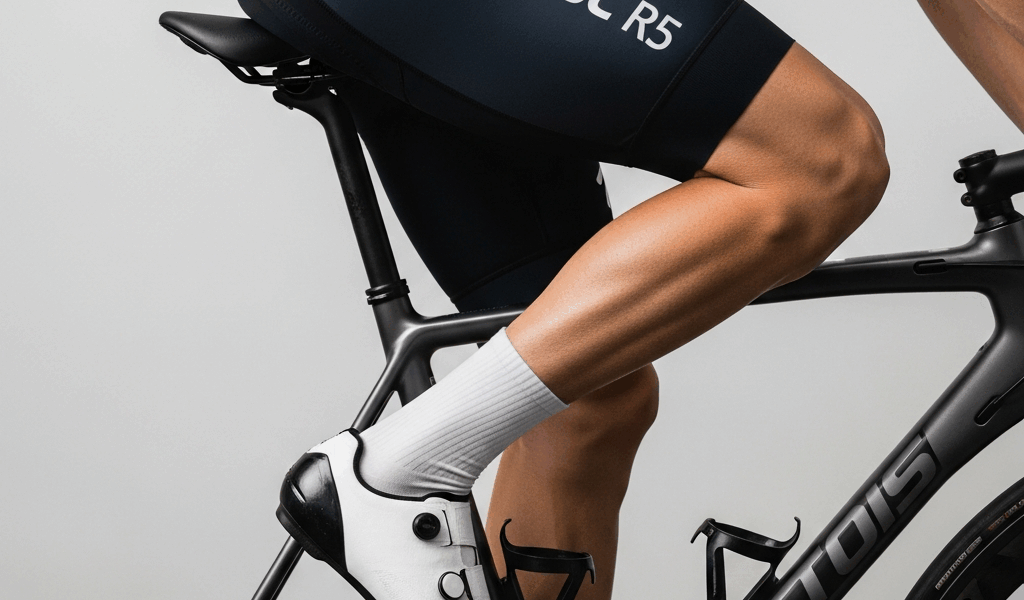
The first sign is hip rocking. Sit on your bike and watch yourself in a mirror, or have someone film you from behind. If your hips sway left and right with each pedal stroke instead of staying level, your saddle is too high. Your pelvis tilts side to side because your leg can’t reach the bottom of the stroke naturally. It looks sloppy. It feels worse.
The second sign is a hot or aching sensation directly behind your knee — at the top of your calf, not the front. Behind it. A saddle that’s too high keeps your knee slightly bent at the bottom of the stroke and then hyperextends it on the recovery. Your hamstring fires harder than it should. After 20 miles, you notice it. After 60, you genuinely can’t ignore it.
The third sign is your toes pointing downward at the bottom of the pedal stroke. Normal pedaling keeps your toes level or angled very slightly up. Too much saddle height forces your foot into plantarflexion — pointing down — because you’re physically reaching to maintain contact. Check your ankle angle at six o’clock. Toes angled toward the ground? Lower the saddle today.
Why Saddle Height Creeps Up Over Time
Two things cause this. Probably should have opened with this section, honestly, because understanding why it happens is half the battle.
The first cause is mechanical. Road vibration and the repetitive loading of your body weight gradually loosen the seatpost clamp. Your saddle drifts up millimeter by millimeter — silently, invisibly, until your knees start complaining. Check your seatpost clamp every month. Hand-tight is not tight enough if you’re logging 15-plus hours weekly.
The second cause is you. I’m apparently the type of rider who confuses discomfort with inefficiency, and raising the saddle worked for me in the early days while leaving it alone never seemed fast enough. Don’t make my mistake. New riders raise their saddles because a low saddle feels slow — which is honestly true for maybe 5mm of height — and then it becomes a liability fast. I watched someone do exactly this at a group ride last spring. Stuck at the same power output for months, kept raising the saddle chasing watts. What they unlocked was bad knees and a mechanic bill around $200.
The Quick Check You Can Do Right Now
But what is a proper saddle height check? In essence, it’s a simple heel-on-pedal test you can run in your driveway in under two minutes. But it’s much more than that — it’s the fastest way to confirm whether everything else is worth worrying about. So, without further ado, let’s dive in.
While you won’t need a fit studio or motion capture software, you will need a handful of things: a wall, a level surface, and 90 seconds.
- Put your bike against a wall or have someone hold it steady. Clip in or strap your feet to the pedals.
- Position the crank arm at six o’clock — one pedal pointing straight down toward the ground.
- Place your heel on the lower pedal. Not the ball of your foot. Your heel.
- Look at your knee and hip. Your leg should be completely straight with zero bend. Your hip should not drop or rock toward the down side.
- If your hip drops or rocks, the saddle is too high.
- If your knee has a noticeable bend, the saddle is too low.
This is a field check, not precision fitting. It catches obvious problems immediately. A physical therapist or certified bike fitter will use tools like the Retül system or a goniometer to measure angles down to the degree — that’s the $200–$400 option. This gives you enough to stop the bleeding today.
How to Lower Your Saddle to the Right Height
First, you should locate the seatpost clamp — at least if you’ve never touched it before. It sits underneath the seat tube where the saddle connects to the frame. Usually a single bolt on one side, sometimes two bolts on opposite sides. Some bikes use a quick-release lever instead, like a Specialized Roubaix or a commuter-style clamp.
A 4mm or 5mm Allen key might be the best option here, as saddle adjustment requires controlled, incremental movement. That is because loose clamps let the post drop unevenly, and you’ll end up chasing the right height indefinitely instead of landing on it.
Loosen the clamp just enough that the seatpost moves under its own weight but still has some friction. Lower the saddle 2–3mm. That sounds almost pointless until you realize most mistakes run 5–10mm too high — so 2–3mm gets you halfway there in one move. Use the heel-on-pedal check again. Still dropping or rocking? Drop another 2–3mm. Repeat until the leg runs straight on the heel test.
Now tighten the clamp. If you own a torque wrench, 5 Newton-meters is the spec for most aluminum seatposts. That was the spec on my Cannondale CAAD12, and it’s held solid for two seasons. If you don’t have a torque wrench, tighten until snug and the post can’t twist, then add roughly 20% more pressure. Hand-tight alone will creep within a week of hard riding.
Before you wrap up, check your saddle angle. It should be level or tilted very slightly nose-down. If you tilted it upward at some point to compensate for excessive height — which a lot of people do without realizing — level it out now. Two problems solved in one session.
Test Ride and Fine Tuning
Spin easy for 10–15 minutes before you judge anything. Muscle memory is genuinely weird. A height that’s correct for your anatomy will feel sluggish for the first few miles because your legs spent months working harder at the wrong position. By mile five, something starts to click. By mile ten, it feels normal.
What you’re looking for: smooth, round pedal strokes. No hip sway catching your eye in your peripheral vision. No pulling sensation behind the knee. No calf ache the next morning. Power might feel softer for two or three rides. That’s expected — your glutes and quads are used to overcompensating. That’s what makes the adjustment process endearing to us cyclists, honestly. We fight the fix harder than we fought the injury.
A saddle 2mm lower than ideal feels slightly slow but doesn’t hurt. A saddle 2mm too high hurts but feels fast — for about three weeks, right before the knee pain arrives. When in doubt, go slightly lower. Injury beats sluggish every single time.
Recheck your height after two or three rides. Your proprioception becomes more accurate once you’re not fighting muscle memory, and you might find you want to drop another millimeter once things settle. Most people need two to three small adjustments across a week to fully dial it in. That’s normal. Give it the time.


Stay in the loop
Get the latest cyclingfan.org updates delivered to your inbox.