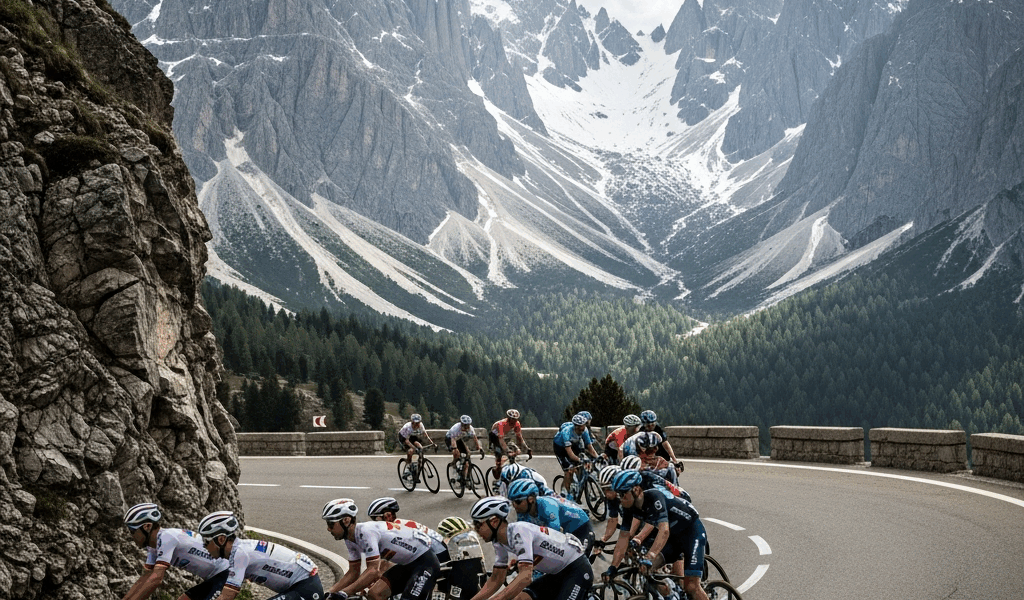
The 2026 Giro d’Italia starts May 8 in Bulgaria — the first time the Corsa Rosa has visited the Balkans — and finishes May 31 in Rome with 49,150 meters of climbing packed into 21 stages. Jonas Vingegaard is targeting a Giro-Tour double. Remco Evenepoel has made this his primary Grand Tour objective. Primoz Roglic wants to add the one Grand Tour missing from his collection. This is the most stacked Giro start list in years, and the route is built to produce drama.
Why This Giro Matters
The 2026 Giro matters because the riders who are coming actually want to win it. Too many recent editions have felt like warm-up races for the Tour de France — strong riders starting with limited ambitions, saving their best form for July. This year is different. Evenepoel has publicly declared the Giro a primary target, not a training block. Roglic is here to win, not to test his legs. And if Vingegaard commits to the Giro-Tour double — which Visma-Lease a Bike has been building toward all spring — it would be the most ambitious Grand Tour campaign since Pogacar swept the Giro and Tour in 2024.
The route starting in Bulgaria adds genuine novelty. Stage 1 runs from the ancient Greek colony of Nessebar to the Black Sea resort town of Burgas. It is flat, designed for a sprint finish and the first Maglia Rosa, but the travel logistics alone make the opening stages an adventure. The race enters Italy on stage 4, and from there the climbing begins in earnest.
With 3,459 kilometers and nearly 50,000 meters of elevation, this is one of the harder Giro routes in recent memory. The 40-kilometer time trial on stage 10 adds another dimension — long enough to create real gaps, and perfectly positioned at mid-race to reshape the GC before the mountains arrive.
The Stages That Will Decide It
Stage 7 — The Blockhaus. This is the first summit finish at 246 kilometers, making it the longest stage in the race. The Blockhaus is climbed from Roccamorice, and the final 10 kilometers consistently hold at or above 10% gradient. After six stages of relative calm, this is where the GC contenders reveal themselves. Anyone who loses time here faces three weeks of chasing.
Stage 10 — The 40km Time Trial. Completely flat, expected speeds of 56-57 km/h for the best riders. This is where Evenepoel’s time trial engine becomes his biggest weapon. The question is whether he arrives at the TT with time to gain or time to defend. A 40-kilometer individual effort against the clock is long enough that even small power differences compound into minutes.
The Queen Stage — Feltre to Alleghe. Over 5,000 meters of elevation gain in a single day. The stage tackles the Passo Duran, Forcella Staulanza, the legendary Passo Giau, and the Passo Falzarego before a stinging uphill finish at Piani di Pezze — 4.9 kilometers at 9.8%. The Passo Giau has not featured in the Giro for several years, and its return on the hardest stage guarantees fireworks. If anyone is going to crack, it happens here.
GC Favorites and Their Odds
Remco Evenepoel arrives as the rider with the most to prove. The 2022 Vuelta champion and 2023 world champion has identified this Giro as a primary target, and his time trial ability on the 40km stage 10 could deliver a gap that the pure climbers spend the rest of the race trying to close. His climbing has improved steadily — the question is whether it has improved enough to survive the Blockhaus and the queen stage without giving back everything the TT earned him.
Primoz Roglic brings the experience of three Vuelta victories and the backing of Red Bull-Bora-Hansgrohe’s deep squad. He has never won the Giro, and at 36 years old, this may be his best remaining chance. Roglic has shown he can survive bad days in Grand Tours better than almost anyone, and a three-week race with this much climbing rewards consistency as much as explosiveness.
Jonas Vingegaard is the wildcard. If he targets the Giro-Tour double, his presence transforms the race. The two-time Tour champion has the climbing ability to win any Grand Tour he enters. The risk is fatigue — a three-week Giro finishing May 31 leaves barely five weeks before the Tour de France starts July 4 in Barcelona. Visma-Lease a Bike will need to manage his efforts carefully, which could mean Vingegaard rides conservatively in the early mountains and attacks only when necessary.
Carlos Rodriguez (INEOS Grenadiers) and Joao Almeida (UAE Team Emirates) are the dark horses with genuine podium potential. Simon Yates returns as the defending champion, though defending a Giro title has historically been more difficult than winning one for the first time.
Stages Worth Setting Your Alarm For
Stage 1 (May 8) — Nessebar to Burgas. Watch for the sprint finish and the first Maglia Rosa. The Bulgarian setting will be visually stunning on television. A low-stakes stage but a great way to get into the rhythm of daily Giro watching.
Stage 7 (May 15) — Blockhaus summit finish. Set your alarm. This is the first real GC test and historically one of the most decisive stages in any Giro. The final 10km at 10%+ will show who came to race and who came to survive.
Stage 10 (May 18) — 40km Time Trial. The longest TT in years. Watch this live if you can. Evenepoel will be in the hot seat, and the split times ticking across the bottom of the screen as each GC rider crosses intermediate checkpoints make individual time trials some of the most tense viewing in cycling.
Queen Stage (late May) — Feltre to Alleghe. Block this day out. Five thousand meters of climbing, the Passo Giau, and an uphill finish at nearly 10% gradient. This is the stage the Giro will be remembered for.
Stage 21 (May 31) — Rome. The processional final stage through Rome will include ceremonial laps past the Colosseum. If the GC is still close, even the final stage could carry tension — though tradition usually protects the leader on the last day.
How to Watch the 2026 Giro
United States: FloBikes holds the exclusive US streaming rights. A FloBikes subscription covers all three Grand Tours plus the Classics. The subscription also includes access to other FloSports channels.
United Kingdom and Europe: Eurosport and GCN+ provide comprehensive coverage with expert commentary. Discovery+ bundles Eurosport content in many European markets.
Australia: SBS and SBS On Demand carry the Giro for free.
Free options: RAI Sport broadcasts the Giro free-to-air in Italy. Viewers outside Italy can access RAI via VPN, though commentary is in Italian. The Giro’s own social media channels provide daily highlights, sprint finishes, and mountain stage summaries within hours of each stage finishing.
Stages typically start mid-morning European time and finish mid-afternoon, which means early morning viewing in the US for the decisive mountain stages. The final two hours of each stage are usually where the action concentrates — if you cannot watch the full stage, tune in for the finale.


Stay in the loop
Get the latest cyclingfan.org updates delivered to your inbox.